Welcome to Shetland, an archipelago where the North Sea meets the Atlantic Ocean. Here you’ll find freedom, wildlife and rugged beauty, but also a rich culture and a dynamic, forward-looking society.

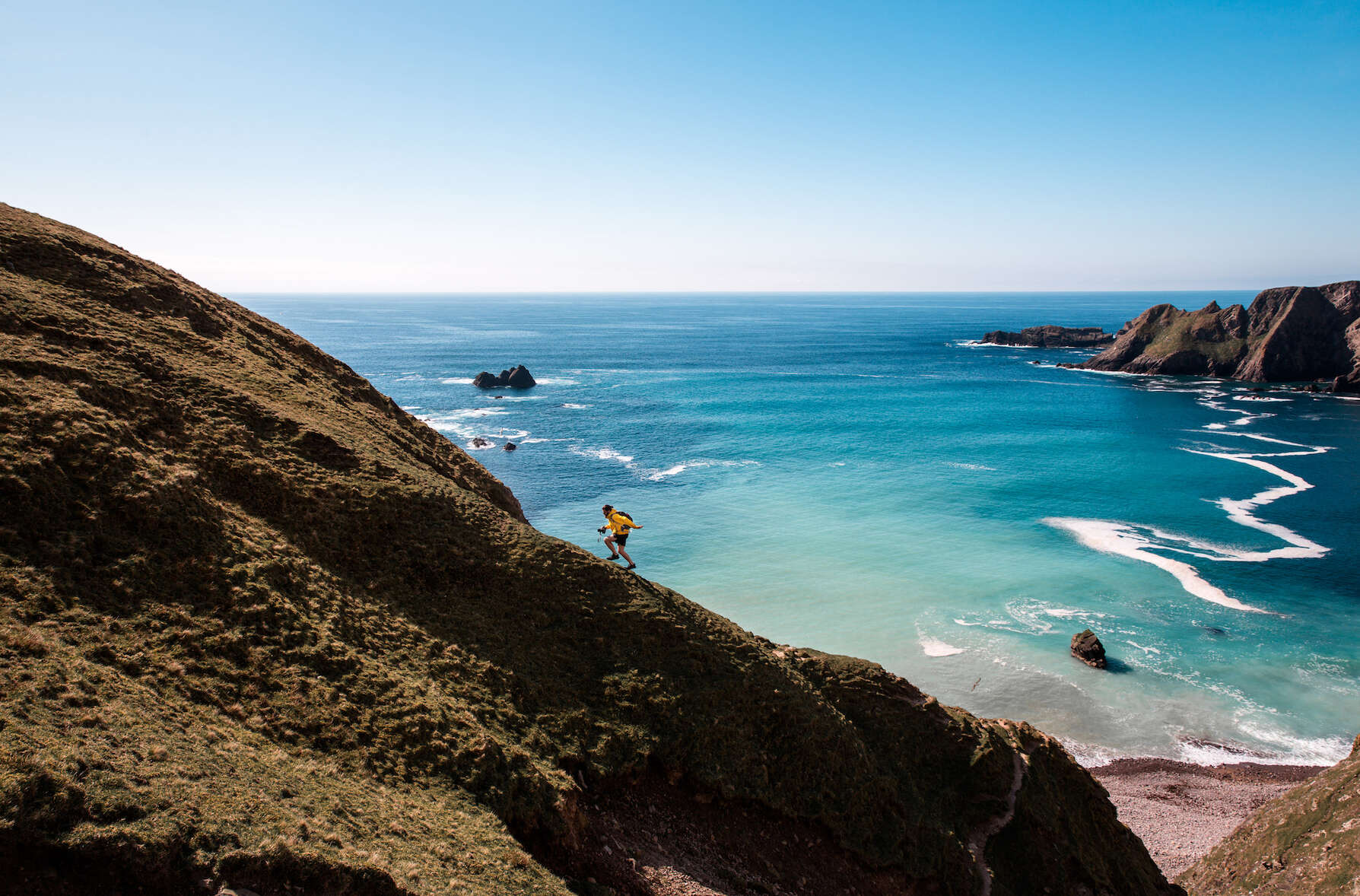
For the visitor, Shetland offers opportunities for adventure and a return to nature – with epic coastal hikes, deserted white-sand beaches and a rich array of wildlife, from otters and orcas to Shetland ponies and bustling gannet colonies.

Unfiltered experiences

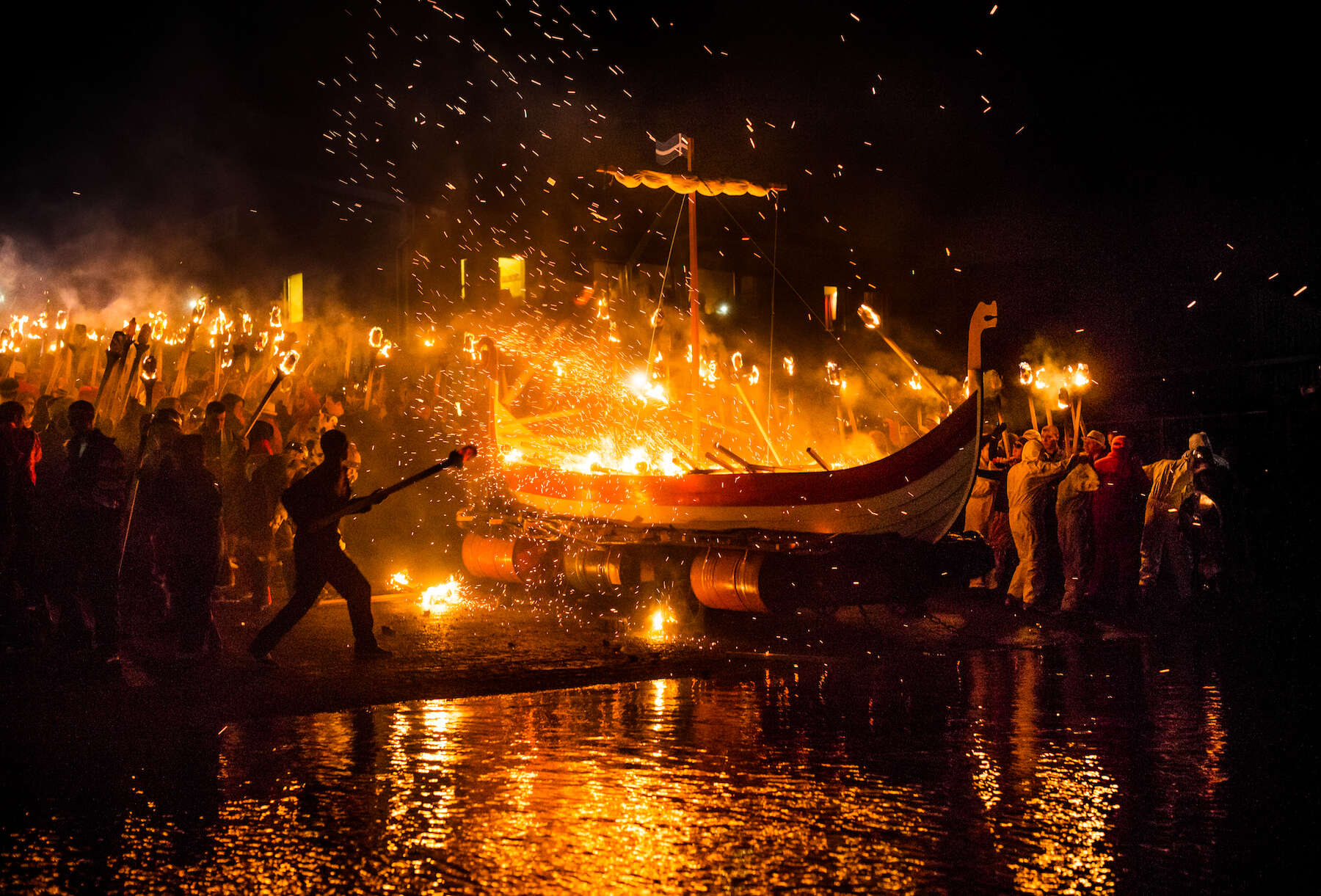
You might come for some of the islands’ famous events, from the Up Helly Aa fire festival season to the Shetland Folk Festival and Shetland Wool Week, or to escape to a seafront bothy or a grand Georgian pile.

You’ll eat amazing local produce, from Britain’s best mussels to tender lamb from free-roaming sheep. All the while, you’ll experience the famous Shetland welcome and the islands’ unique culture, with clearer Viking and Scandinavian influences than anywhere else in the UK.

It's a place to experience what it means to be in Shetland, whether that's joining a pub music session, exploring thousands of years of archaeology or millions of years of geology, or simply feeling the seaspray while on a coastal walk.

Dynamic economy

But Shetland is much more than just a visitor destination. Shetland’s dynamic economy gives employment across multiple sectors, and the islands are at the forefront of innovation, spanning everything from renewable energy to small satellite launches from one of the UK's first spaceports.

Whether you’re looking to grow your career or for the chance to start a business in a beautiful part of the UK, a new job and lifestyle may be waiting for you.

You’ll be welcomed into a vibrant society, where community and sustainability are more than buzzwords, with great schools, world-class infrastructure and loads to do, from sports clubs to events and outdoor activities. With low crime (it’s not really like the Shetland TV series), Shetland is a place where children can roam freely, and where many people live with a view of the sea.

Islands of opportunity

Whether you’re looking to visit, live, work, study or invest, or are just interested in finding out more about Shetland, you’ll find the answers to some basic questions about Shetland below, and will find out much more on the rest of this site.

Enjoy these Islands of Opportunity!
  • What is Shetland?

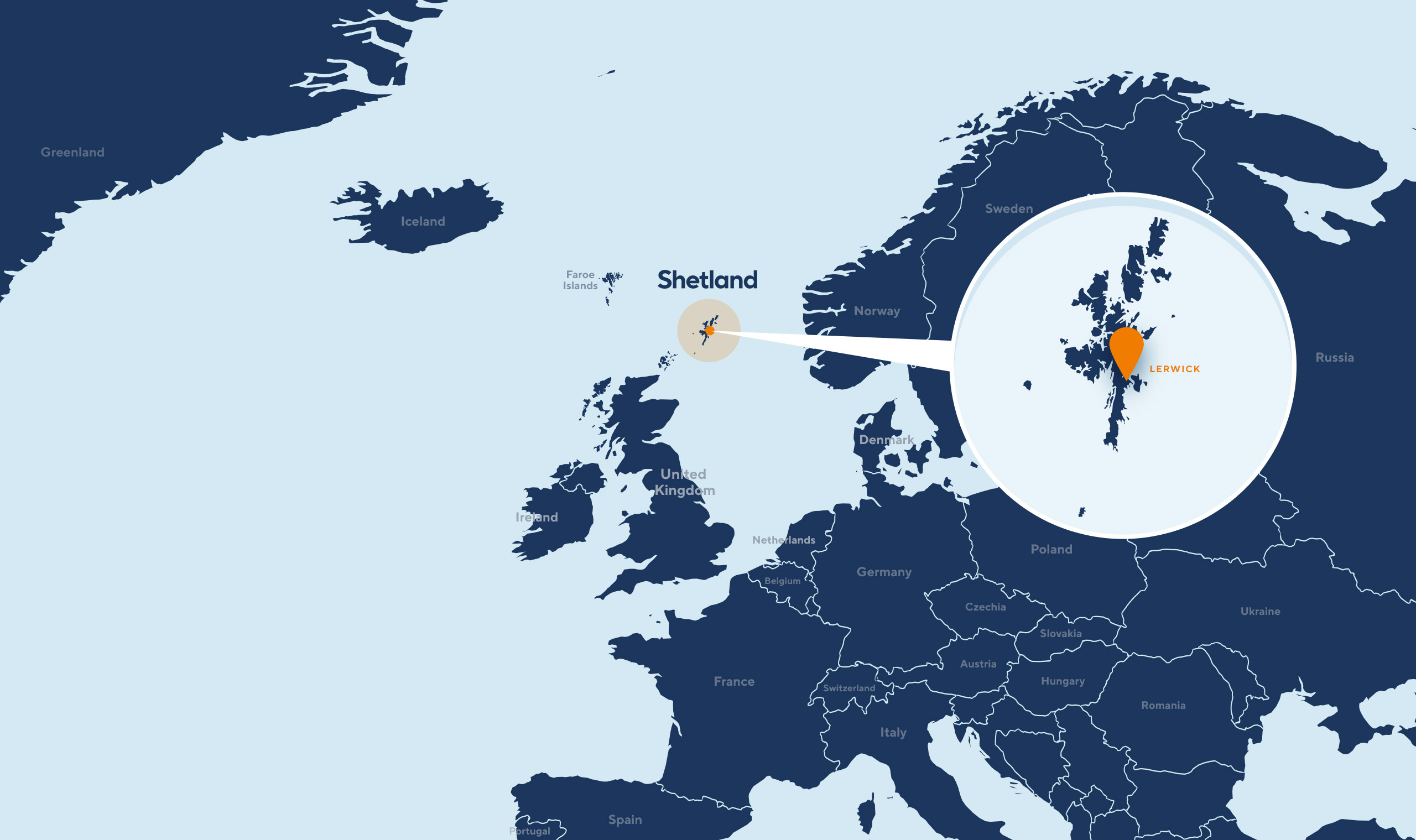
    Though it’s always written as a singular entity, Shetland is an archipelago in the North Sea of around 100 islands, 16 of them inhabited (and many others accessible by boat), with a total population of 23,190. The largest island is known as the Mainland (as opposed to the Scottish mainland).

    To the north of the Mainland are the North Isles of Yell, Fetlar and Unst, the latter of which is Britain’s northernmost island, and is home to around 640 people as well as the innovative SaxaVord Spaceport.

    In the sea to the south, almost halfway to Orkney, is the island of Fair Isle, with a population just a shade over 50, while Foula to the west and Out Skerries to the east are even more sparsely populated.

  • Where is Shetland?

    Shetland is in the middle of the North Sea, surrounded by some of the North Sea’s richest fishing grounds, excellent natural energy resources, and close to some of its most productive oil fields.

    The line of 60 degrees latitude cuts through Shetland’s South Mainland – but, while Shetland is on the same latitude as parts of Alaska, it is warmer thanks to the Gulf Stream. Directly to the east lies the Norwegian coast, with Shetland closer to Bergen than Inverness.

    To the northwest lie the Faroe Islands and then Iceland, a popular route for many of the cruise ships that stop in Shetland. To find out more about the specific geography of Shetland and learn about its areas, see this interactive map or discover the geology that shaped the islands on the Geopark Shetland site.

  • How can I get there?

    The main ways are by plane or ferry, though you could also come to Shetland on a private yacht or as part of a cruise.

    Flights are operated by Loganair, taking just over an hour from Aberdeen and around an hour and 20 minutes from Edinburgh and Glasgow, with amazing views as the plane lands at Sumburgh Head, on the southern tip of Shetland’s Mainland.

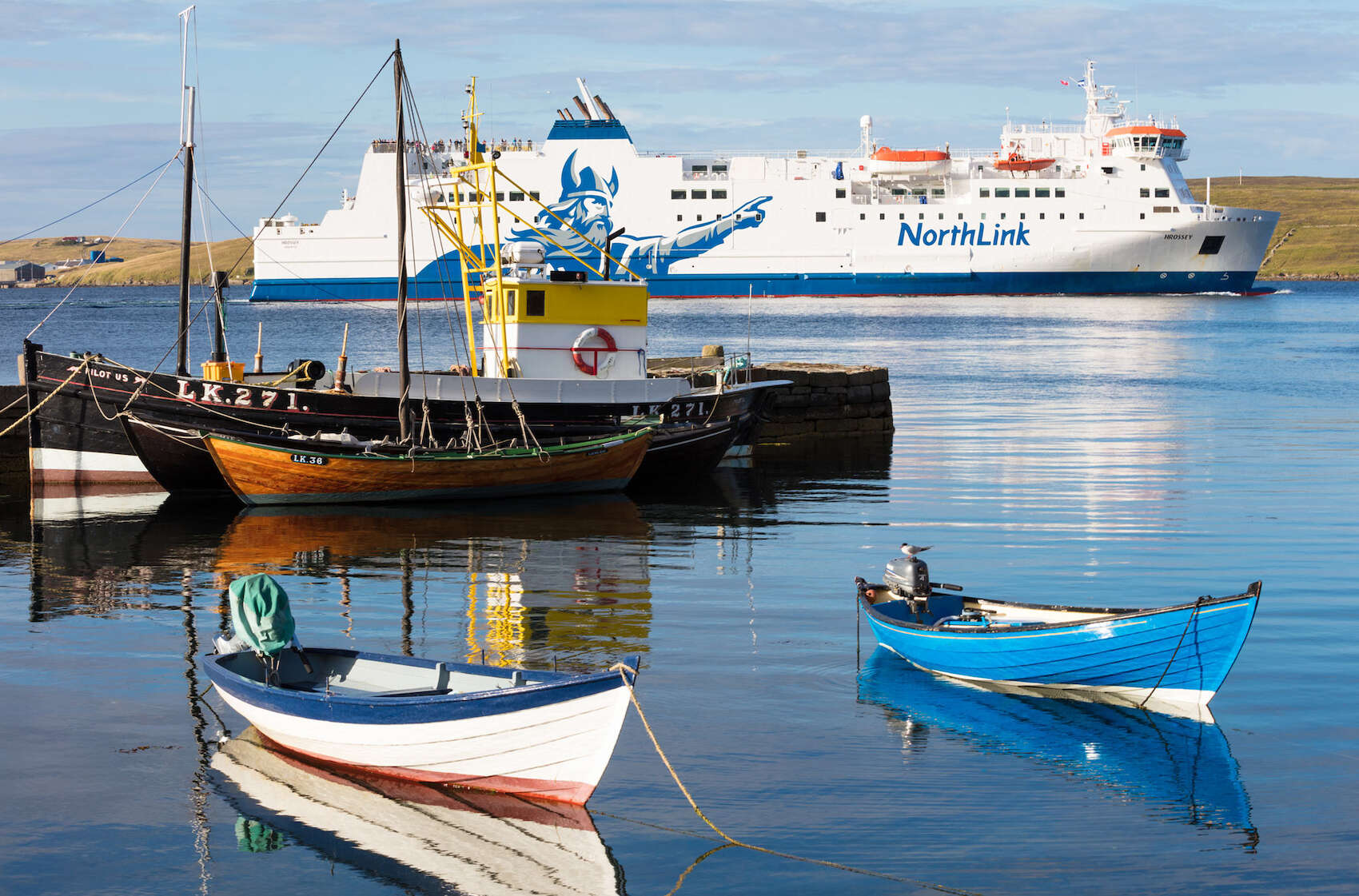
    The NorthLink ferry from Aberdeen to Lerwick takes around 12 hours and 30 minutes, leaving in the evening and arriving early in the morning. Like the flight, it’s a journey in itself, with an onboard cinema, cosy cabins and good food at the buffet or quieter Magnus Lounge – all while scything through the grey North Sea.

    For more on getting to Shetland, see the flight and ferry pages.

  • How do I get around?

    Shetland is bigger than some people expect. It takes around an hour to drive from Sumburgh, at the southern tip of the Mainland, to Toft in the north. From there, if you time the ferries right, it takes around two hours to reach the car park at Hermaness, on Britain’s northernmost edge.

    That journey from end to end is around 85 miles, and there are countless detours from the main roads, including to the beautiful West Side and the lighthouse at Eshaness, surrounded by dramatic cliffs and stacks.

    Roads are generally in great condition, with two lanes on larger roads but many single-track roads. On the North Isles, avoiding sheep is often more challenging than avoiding other cars. Read more about getting around Shetland here.

  • Where can I stay?

    david-gifford-shetlandorg-caravan-and-camping-02.jpg

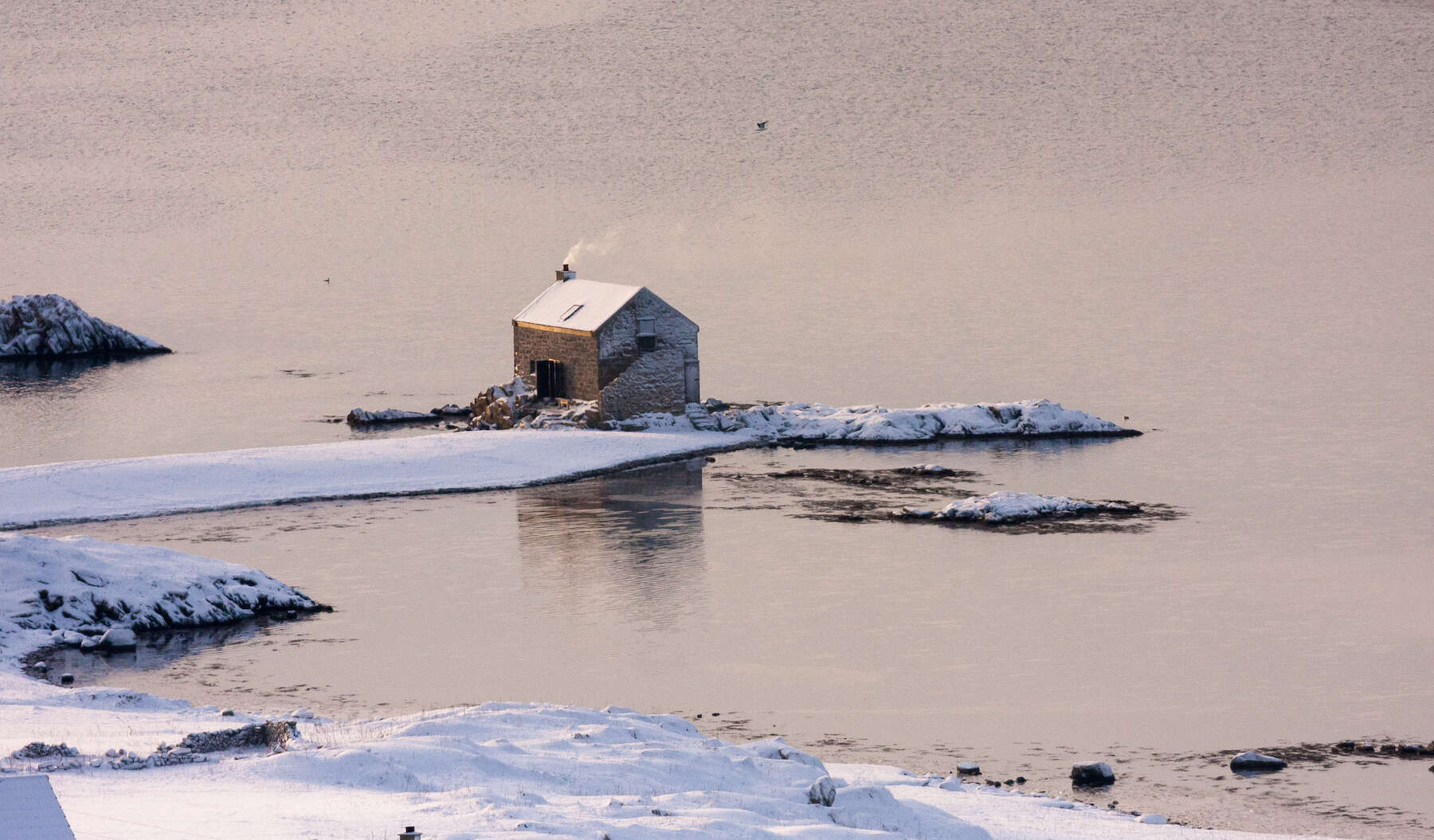
    There are hotels, self-catering options, and B&Bs across the islands, as well as camping and caravan sites and böds, the Shetland answer to the bothy. available for low prices and sometimes without electricity. Shetland is also a great place for wild camping, offering the chance to wake up surrounded by nature. Read more about accommodation in Shetland or discover your perfect place to stay.

  • What is the Shetland landscape like?

    deepdale_2_1.jpg

    If the landscape feels ancient, that’s because it is. Some rocks were around almost three billion years ago, and Shetland is recognised as a UNESCO Global Geopark for the amazing geology of a landmass that has moved from near the South Pole, shaped by continental collisions and crashing seas.

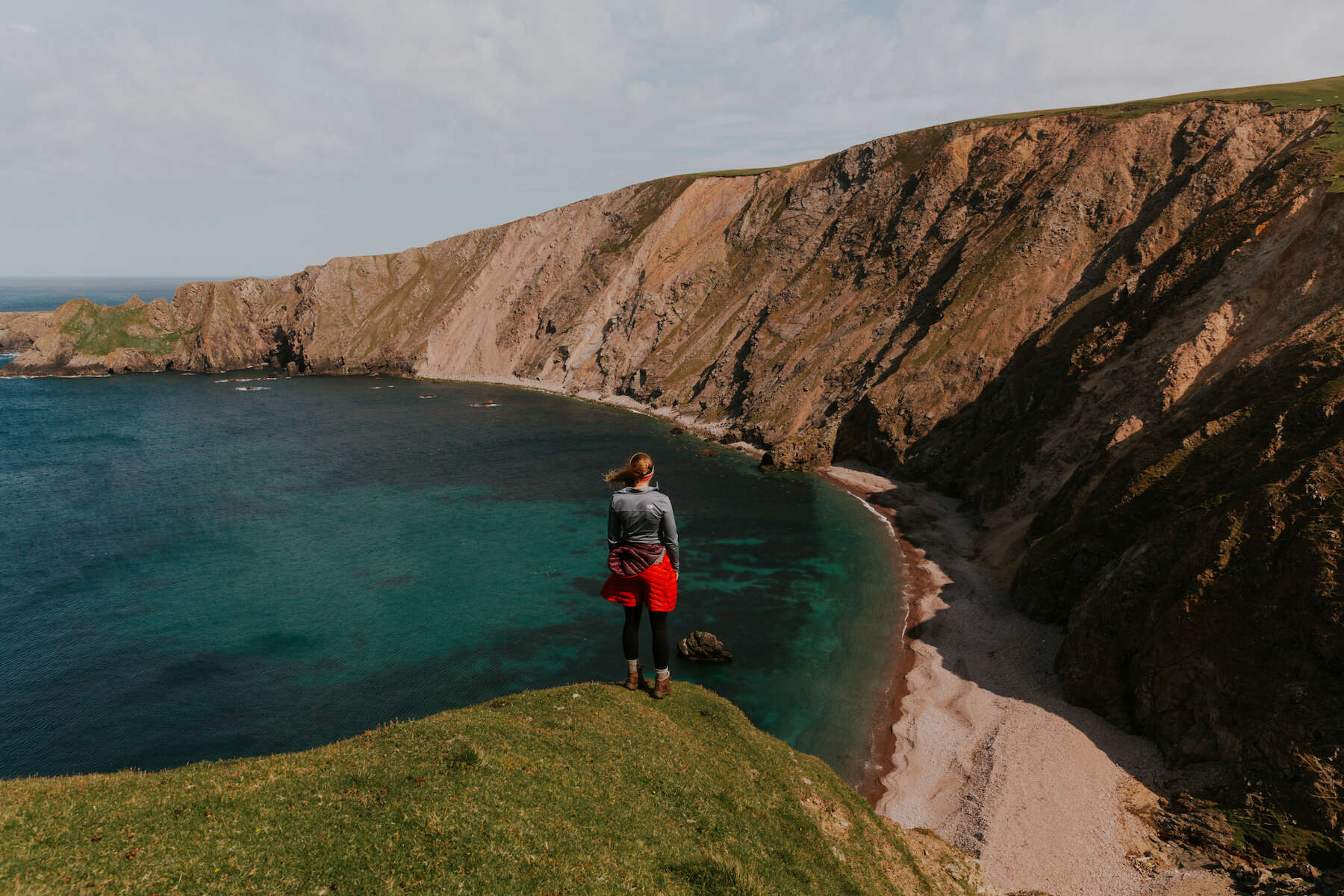
    That incredible journey means the landscape is incredibly diverse, from plunging stacks and cliffs pocked with blowholes to long sandy bays, glacial valleys and heather-clad moorland. Just on the Shetland Mainland, the landscape changes as you head north, from the beautiful sandy bays and tombolos in the south to the wild, volcanic landscape around Eshaness in the north.

    On the eastern side of Unst, Britain’s northernmost island, the rocks came from the crust on the ocean floor, making this one of the most accessible and complete examples of an ophiolite in the world. And while the landscape is fascinating, you’re never more than three miles from the sea.

  • What is the weather like?

    david-gifford-shetlandorg-misc-35.jpg

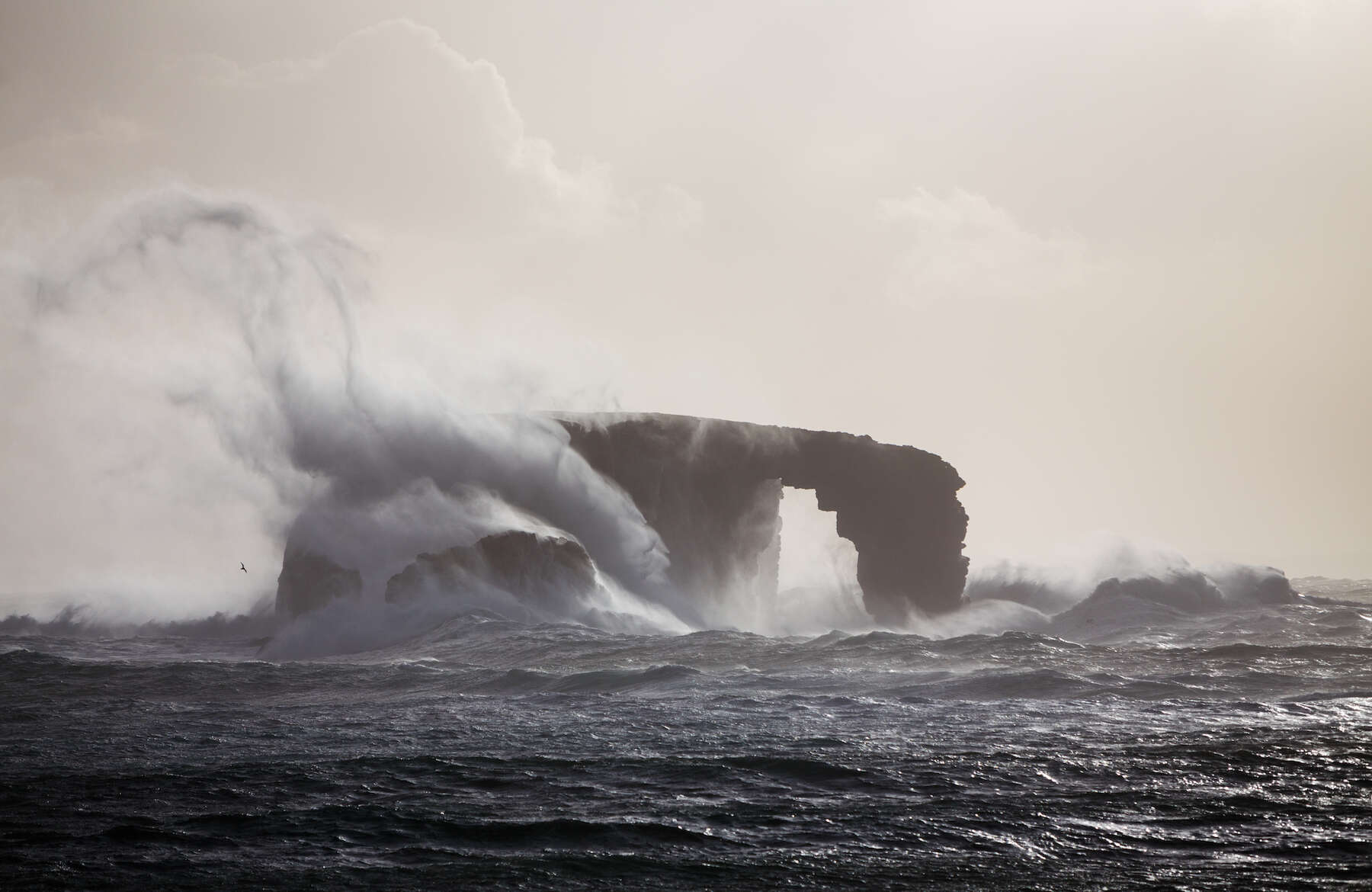
    Shetland may have a northern latitude but it is warmed by the Gulf Stream. Summers are relatively dry, with much of the rainfall falling during winter storms, when the seas can be huge.

    The average wind speed of Force 4 is part of the reason that Shetland is such an attractive place for wind turbines, both onshore and offshore.

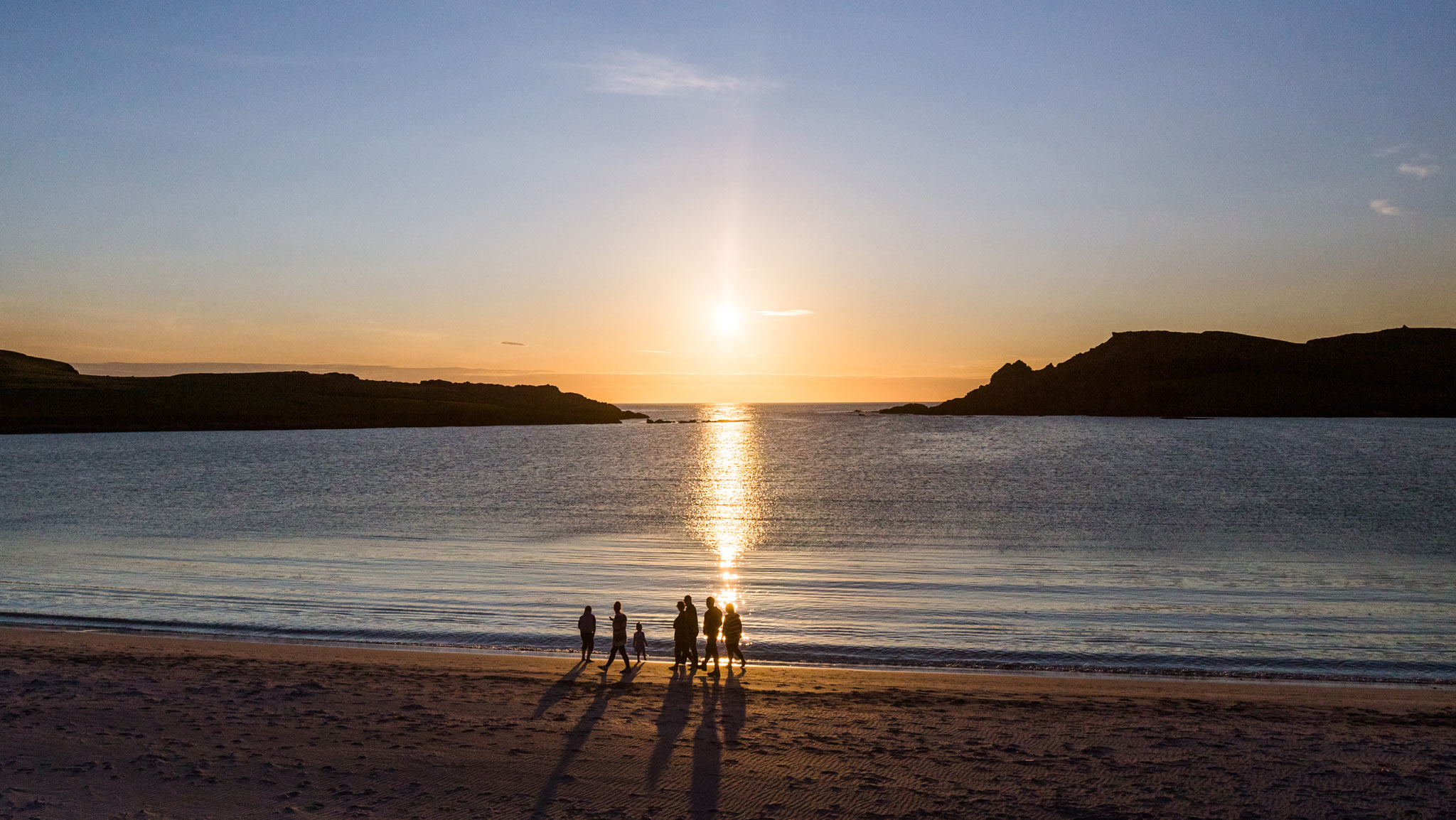
    It is light throughout the evening around midsummer, or the ‘simmer dim’, and the northern lights can be seen during the winter, or the ‘mirrie dancers’ as they are known in local dialect.

    Daily mean temperatures don’t get beyond 13 degrees Celsius in August, or below three degrees, in February. Although the weather can be changeable, when there is a beautiful sunny day, there are few places like it.

  • What is Shetland's history?

    david-gifford-uha-delting-05.jpg

    More than 5,000 archaeological sites across Shetland hint at a long history, with evidence of human activity here as far back as 4,320BC. Between 150 and 200AD, brochs were built near the sea across Shetland – hollow stone roundhouses that may have been defensive fortresses or the Iron Age equivalent of stately homes.

    In the ninth century, Shetland was colonised by the Vikings, the start of a long Norse and Scandinavian influence, even after the islands were reclaimed by Scotland in the 14th century.

    Today, the Norse influence can be felt not just in Viking sites like the famous Jarlshof settlement near Sumburgh Airport, but in its place names, many of which are derived from Old Norse. Lerwick, for example, means ‘Muddy Bay’, the ‘wick’ not far from the ‘vik’ of Icelandic and Swedish. And Shetland dialect is unique, with outsiders soon picking up words like ‘peerie’ (small) and ‘bruck’ (litter), many of them with Norse origins.

    Hence, while Shetland is a welcoming and outward-looking place (partly thanks to centuries of sea trading), it also has its own identity and folk culture, from folk music to myths about trows, the Shetland answer to elves.

    Shetlanders often see themselves as Shetlanders first and Scots second, and have tended to vote differently from the Scottish Mainland, voting Liberal or Liberal Democrat in every election since 1950.

  • Is Shetland cut off from the rest of the world?

    No, not at all. While Shetland does have strong connections with its heritage and nature, the islands are also forward- and outward-looking, welcoming outside influences and fresh ideas.

    Events like the Shetland Folk Festival or Shetland Wool Week celebrate ancient traditions, but are really about modern trends in folk music and textiles. This is a vibrant modern society, connected to the Scottish mainland and the world by fast broadband and regular flights.

    While many Shetlanders like to shop locally and sustainably, especially on Lerwick’s increasingly buzzy Commercial Street, there is a large Tesco on the edge of town, and Amazon and most UK Mainland retailers deliver reliably to Shetland.

  • What is there to do for visitors?

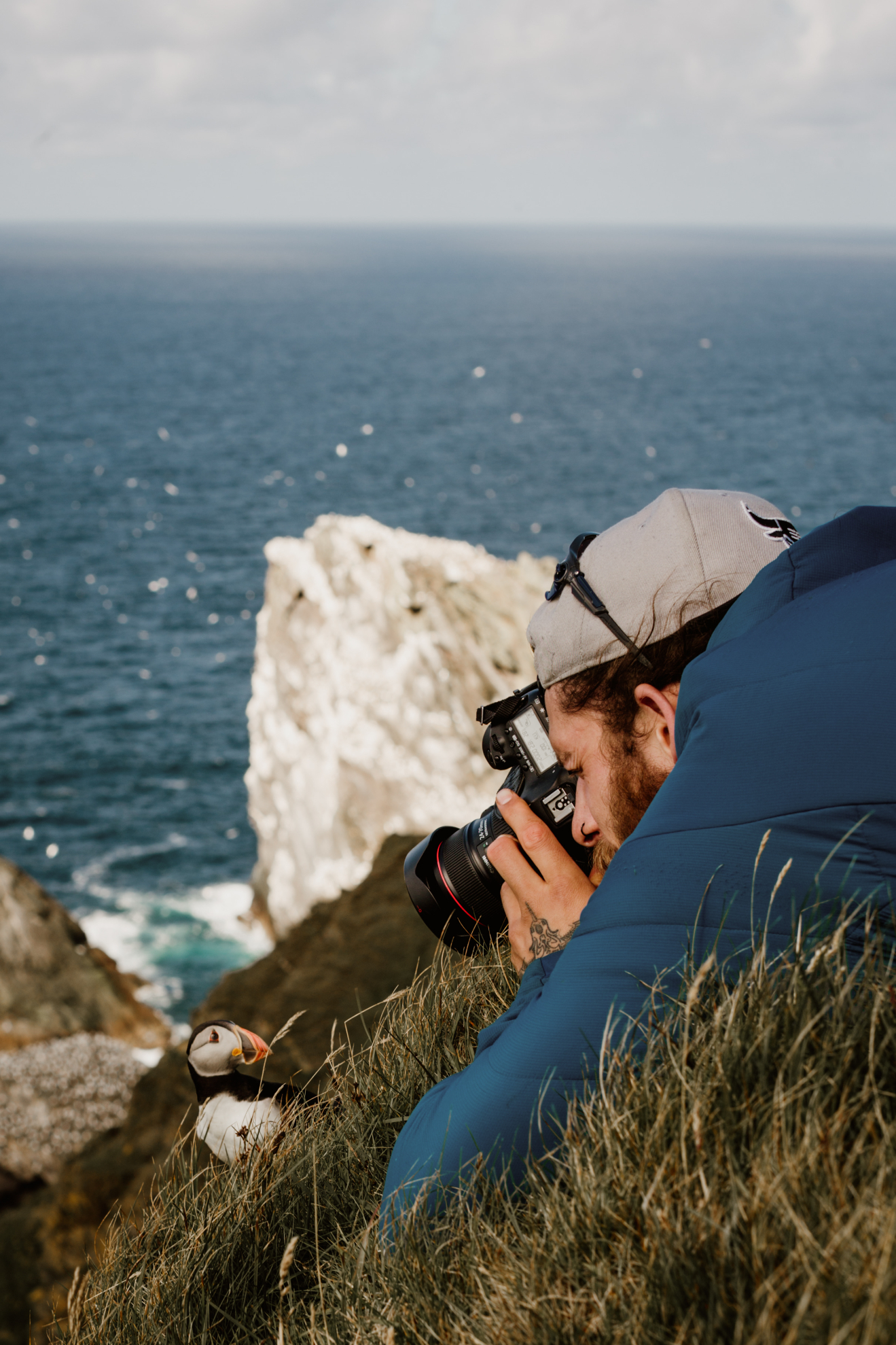
    One of the biggest appeals is the wildlife, from photographing otters or rare red-necked phalaropes to spotting orcas, or fishing for halibut around the Muckle Flugga lighthouse at the edge of the British Isles.

    There are kayaking trips around the islands, and boat trips galore – whether to see the broch at Mousa, the diving gannets at Noss, or to take a cruise to the remote isle of Foula.

    Shetland attracts enthusiasts – bird-watchers, artists, photographers, wild swimmers, textile obsessives, and so much more – especially to world-renowned events like the Shetland Folk Festival or Shetland Wool Week. But it’s also a great place for just getting away: for strolling across the sandy tombolo at St Ninian’s; for seeing the Lerwick home of Jimmy Perez in the Shetland TV show; or for walking along the beautiful cliff edge to see the lighthouse at Muckle Flugga, Britain’s northernmost point.

    With its wild seas and huge skies, Shetland is a true escape.

  • What do locals do all day?

    dsc_4270.jpg

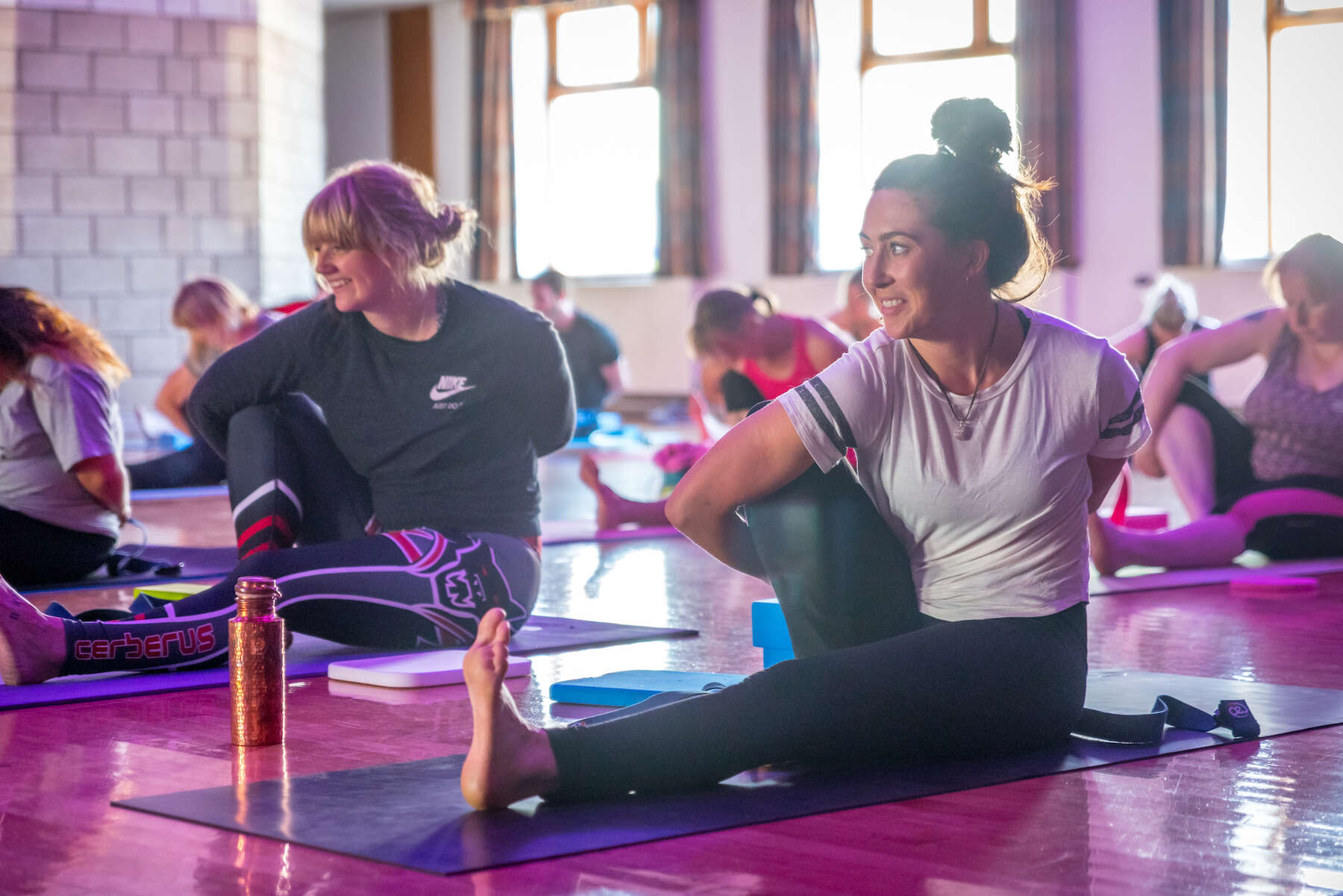
    Many people who move to Shetland report their lives becoming busier than ever. There are clubs and classes for everything from archery to yoga and tai chi, with golf courses, sports pitches and a clay-pigeon shooting range. There are state-of-the-art leisure centres across the islands, especially at Clickimin in Lerwick, with its pool, health suite and squash courts, surrounded by football and rugby pitches, an all-weather surface, and an athletics track.

    The options for outdoor adventures are almost endless, too, from coasteering and kayaking to rock-climbing (there’s also an indoor wall in the West Mainland Leisure Centre, too) and racing traditional yoal boats. It’s the same for creative pursuits, with craft, photography and music meetups, choirs, brass bands and much more. And there are always films, gigs, art shows and other events at the Mareel cultural centre, the Bonhoga art gallery and other spots across Shetland. It’s easy to get involved and to be busy.

  • What are the big events in the Shetland calendar?

  • How is the wildlife special?

    rw_puffin.jpg

    Shetland is one of the best places in Europe to see bird life and sea mammals. For bird-watchers, Shetland is a paradise, from the puffins at Sumburgh Head to Fetlar’s tiny, rare red-necked phalaropes and two of the UK’s largest gannet colonies, on the cliffs of Noss and around Hermaness, on the northernmost edge of the country. The gannets come for the same reason as the fishermen – great shoals of herring and mackerel.

    Shetland is also home to the highest density of otters in Europe, and possibly the world. Even though they’re wary of humans, they can be spotted around the islands and are often seen around ferry terminals.

    Grey and common seals are a more common sight, and little heads bobbing in the water will often follow walkers around headlands on coastal jaunts. The sheer number of seals is the primary reason for another of Shetland’s regular visitors: orcas, which are seen throughout the year, but especially in June and July, when the seals are having pups. Humpbacks, minke, and other whales are also sighted.

    On land, of course, Shetland ponies are a frequent sight around the islands, evolved to be squat and hardy (as well as cute) through 4,000 years of roaming the exposed hills and moors of Shetland. Read more on Shetland wildlife.

  • What’s the food like?

    Shetland is all about fresh local produce – from some of the world’s best mussels to tender lamb and fresh eggs from honesty boxes around the islands. Shetland seafood is exceptional, as you'd expect given that the islands are surrounded by some of the most productive fisheries anywhere, and are home to salmon, mussel, and oyster farms.

    Milk, cream, butter and cheese are all made in Shetland, and vegetables are grown in Polycrub greenhouse tunnels across Shetland. The best-known is the Shetland Black potato, which pairs well with local roast lamb or beef. Other famous local dishes include dried reestit mutton, often eaten in tattie soup and served with bannocks, the savoury local answer to scones, or sassermaet, a lightly spiced type of minced beef patty.

    More and more local suppliers are working with local produce, from farmers to fishmongers and bakers, and making everything from Shetland marmalade to sea salt, gin and beer.

  • What drives the economy?

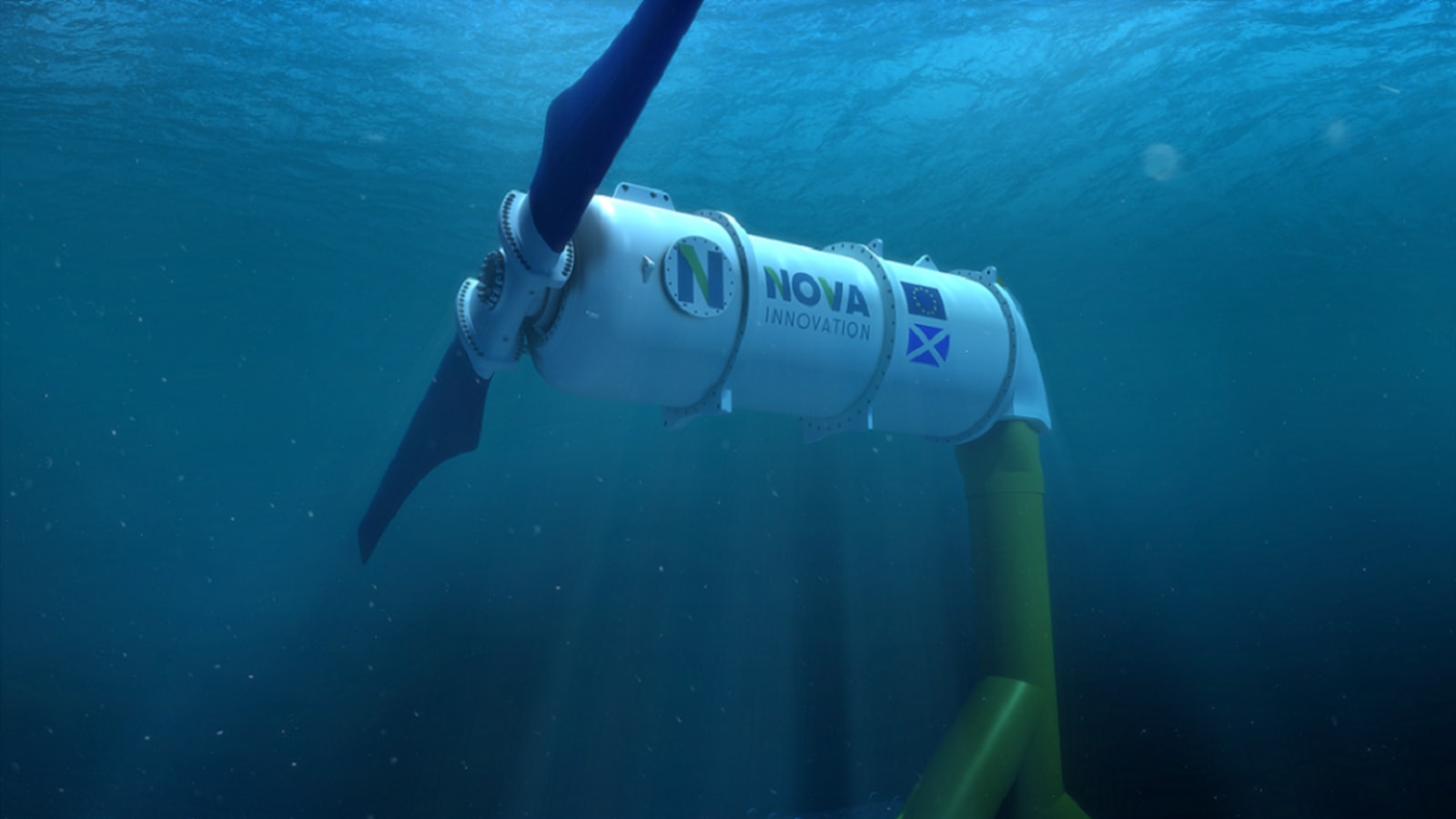
    106159796-1570007596504nova_turbine_hd_still_1mb.jpg

    Shetland is less reliant on tourism than many Scottish islands.

    The energy industry has been a major part of the economy since the 1970s, and the discovery of North Sea Oil. Shetland's role in the industry, helped to fund everything from leisure centres to great roads and cultural events through a series of charitable trusts.

    Now, the islands are in the process of transitioning from oil to clean renewable energy, and Shetland is home to the largest onshore wind farm in the UK. There are ambitious plans for the islands to become a national and global hub for wind and tidal energy, and the production of clean hydrogen.

    Even so, the energy industry here remains much smaller than the fishing industry. More fish is landed here than in England, Wales and Northern Ireland combined, and aquaculture has boomed in recent decades, especially salmon and mussel farming.

    New fish markets and docks in Lerwick and Scalloway, as well as modernisation of the pier at Cullivoe, suggest confidence in the continued growth of fishing and aquaculture.

    Shetland is also innovating in other areas, too, especially in the fast-growing space industry, planning to launch small satellites from the Shetland Space Centre in Unst – using not just the islands’ helpful geography, but decades of engineering know-how.

    While many island communities have struggled in recent decades, Shetland has consistently had higher employment levels than the rest of Scotland, and the islands are often actively recruiting workers from the rest of the UK, especially for public sector jobs.

    Some quick facts about the Shetland economy

    More fish is landed in Shetland than in England, Wales and Northern Ireland combined.

    Shetland harvests 40,000 tonnes of salmon a year, worth £180 million.

    More than 8,000 tonnes of mussels are grown in Shetland, around 85 per cent of the total Scottish production.

    Shetland’s Bluemull Sound is home to the world’s first tidal energy array.

    The 103-turbine Viking Energy project is one of the largest onshore wind farms in the UK, generating enough to power around 500,000 homes.

    By 2050, Shetland aims to provide five per cent of the UK’s low-carbon energy.

    The Shetland Space Centre on Unst is set to become the UK’s first commercial rocket launchpad.

    The employment rate in Shetland is 10 per cent higher than the Scottish average.

    Shetland’s tourism economy was valued at over £50 million in 2024, with over 80% of visitors scoring the experience as 9 or 10 out of 10.

  • Will I understand what people are saying?

    shetland_web-75_1.jpg

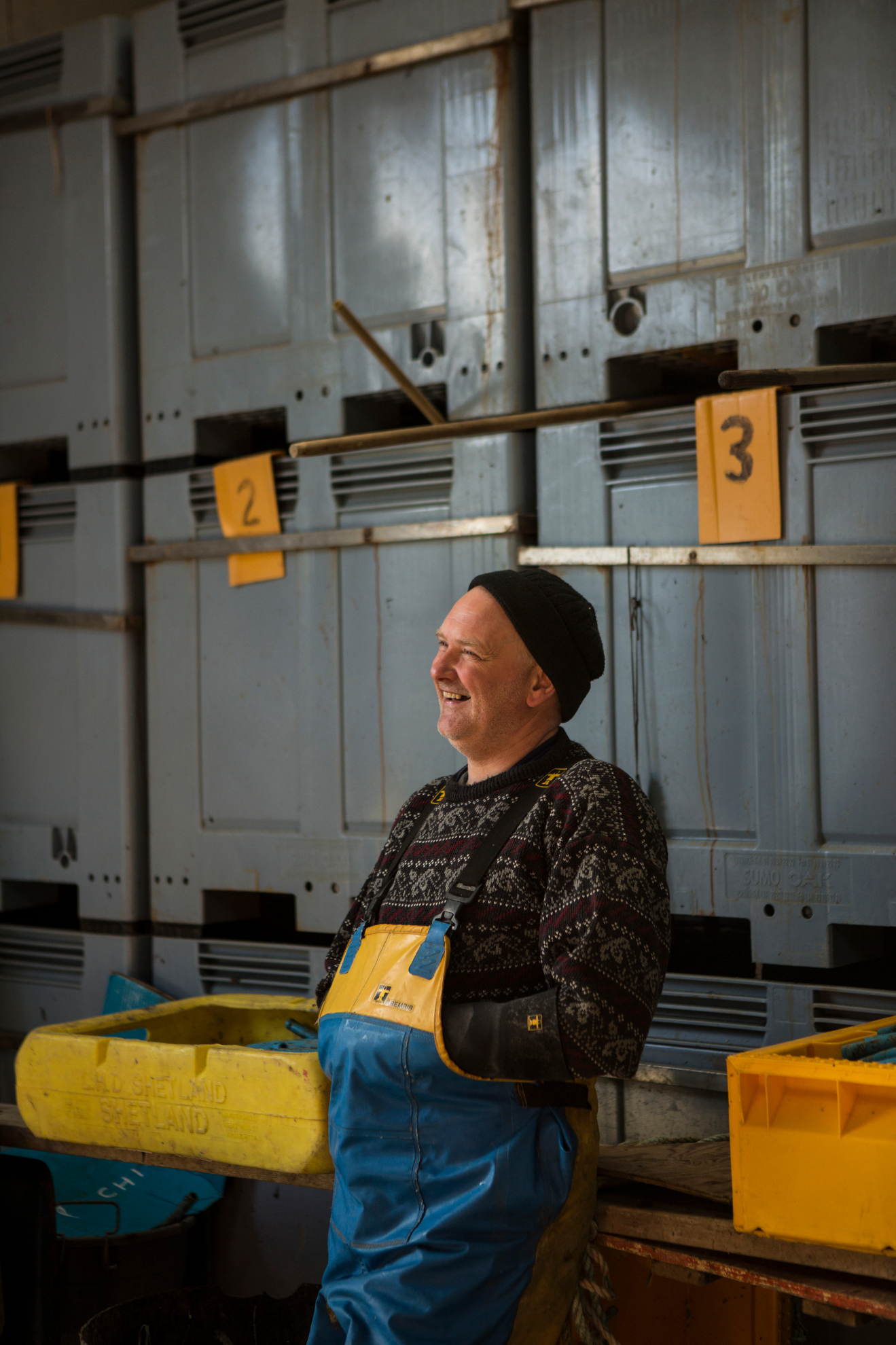
    Yes, though you might miss some words and struggle to decipher some conversations between born-and-bred Shetlanders, like Yell mussel farmer Christopher Thomason (above). Shetland dialect is a unique blend of Lowland Scots and Norse languages. There’s no practical need to learn any, but the words below will give you an idea:

    Bruck Litter

    Da moarn Tomorrow

    Dee or du You

    Draatsi Otter

    Eenoo Just now

    Faert Afraid

    Gaff Laugh

    Gansie Traditional knitted jumper

    Mak Make

    Mirrie dancers Northern lights

    Peerie Little

    Peerie-wyes Carefully, cautiously

    Pleep Whine or complain

    Reestit Smoke-dried

    Simmer dim Twilight on a summer’s evening

    Tammy Norrie Puffin

    Trow A mischievous fairy

    Twa Two; a few

  • Is it like the Shetland TV series?

    BBC/Silverprint Films/Jamie Simpson

    Yes and no. You’ll find the same heathery moorlands, quiet beaches, and dramatic skies. And if you're a fan of the early seasons, you can walk past Jimmy Perez’s cute waterfront house, which is in reality The Lodberries in Lerwick.

    But not every scene in the Shetland TV show was filmed here, and we like to think the real thing is even more spectacular.

    More to the point, there’s far less crime. Shetland is an extremely safe place, where the community looks out for one another. And while it’s often assumed that Shetland might be the kind of place that people come to escape and hide out, for the most part, the opposite is true – it’s a place to be enfolded by the community.